Being on sabbatical and having the time to actually contemplate my own work, I can see the influence of some of my earliest artistic heroes and how their presence has never quite left me.

There’s this great story of Robert Motherwell and the creation of his Lyric Suite. During the summer of 1965 Motherwell was experiencing a creative block. He had 1000 sheets of Japanese mulberry rice paper, which he had previously purchased on a whim. In an effort to work through his block, he decided to lay out the papers on the floor of his studio and to work on them in succession using only a brush and ink. An exercise in psychic automatism.
I had a real painting block, I simply couldn’t paint…somehow the old definition of Surrealism came back to me – to work without “a priori” judgement. And I thought why not just make a stack of things – make it as a rule of the game that I don’t judge them, change them, I just go on and on and on…I arrived at 565 and I had broke through…
– Robert Motherwell
I have repeatedly employed a similar technique in my own practice. Trying to let go of expectations and play – experimenting rather than thinking – engaging with the materials and process to see what happens. Sometimes the rewards are immediate, and sometimes they need time to soak in and cannot be recognized until years later.
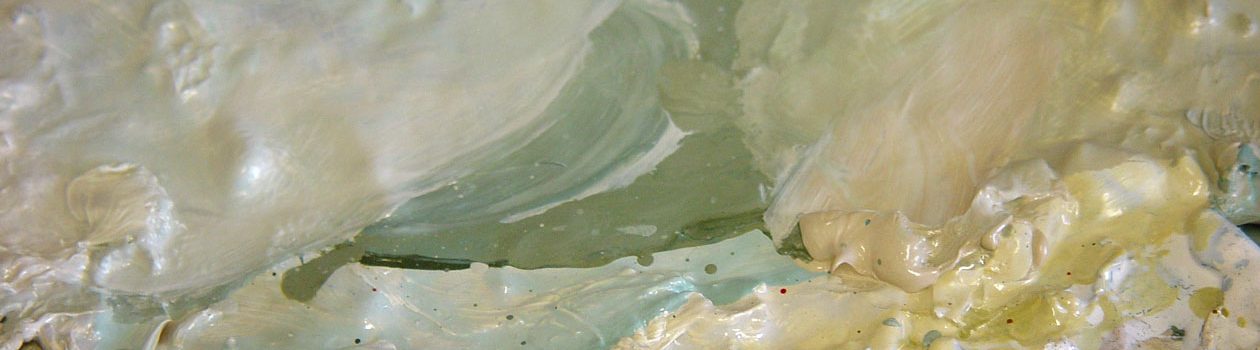
These two studies in oil are the result of embracing that type of practice, and will serve as a starting place for the series to come.

In looking at these atmospheric studies now, I also see the presence of the first painter that I consciously tried to copy, James McNeill Whistler. It was his Nocturnes which first seduced me with with their thin veils of layered color, soft edges, and beautiful subtlety. Still to this day I seek out examples of his work while traveling – partly because of his technique, partly because of their beauty, and partly because his work communicates so much more than just the physical appearance of things.